2,093+
Climate & impact investors
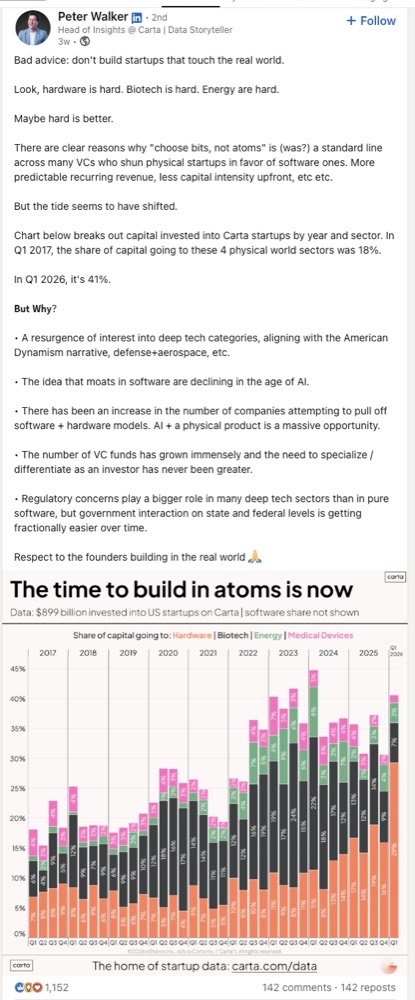
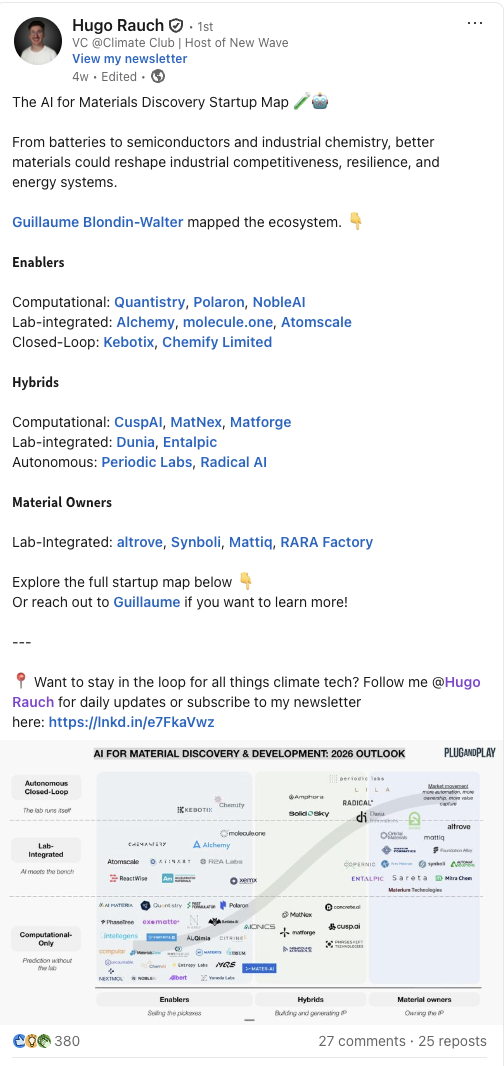
A state of investors' communication, from the analysis of 2,000+ climate and impact VCs on LinkedIn.
Why this report?
Let's learn directly from the data.
That first report covered 2,228 founders and operators across all of climate tech, the whole room.
Read the first report ↗April to June 2026
Methodology
Pick one to jump in, or scroll to read it all.
No surprise.
And they're not all career financiers.
Now, about the funds behind them.
Counting only the investors I identified posting on climate or impact topics on LinkedIn, not whole teams.
That is the ecosystem: a broad, open field, with voices carried by individuals more than by brands. So who, among these investors, actually takes the floor on LinkedIn?

Shares a point of view. A thesis, a framework, what they believe and why. The rarest voice here, and the one read the most per post.

Shares the news. Funding, launches, milestones, hiring. Lands best when the post carries the reason behind it.

Shares people, events, and moments. The most human voice, and the most common way VCs show up.

Champions others. Portfolio companies, peers, ecosystem wins. Generous with reach, and a strong base to grow an original voice from.
In climate & impact, Europe leads, ahead of the US.
About 55% Europe, 35% US.
Four in ten are operators turned investors.
Built or ran a company first.
The field is generalist.
Only 1 in 5 funds is a dedicated climate specialist.
Funds have no voice of their own.
8 in 10 appear through a single person.
A small group carries the engagement.
About 60 people, 55% of the total.
About a third of the field actively posts.
31% are actively posting.
The voice belongs to partners and ex-founders.
77% of that group, vs 58% of the field.
Median engagement per post and share who post, by country. Countries with at least 50 original posts.
Surprising how few US funds show up here, given that most climate-tech capital is still American. Quentin and I looked into it. A few reasons stand out: US VCs post very little under their own name. Fewer original posts, more pure reshares, so their numbers come out low. Some exceptions, like Caie at Lowercarbon. US funds seem to leave less room for individuals. A lot of the communication runs through company pages instead. Taxonomy effect: some US VCs have dropped “climate” entirely, positioning as “deeptech” or “energy.”
 🇫🇷 Laurie MenoudFounding Partner · At One Ventures
Median engagement per original post, by role.
Former founders also rank high, but that is volume and habit. Per post, a former-founder background lands no higher than a finance-only one, as the next slide shows.
Debunking the myth that you need to be a partner to post successfully is my favorite insight, really interesting, and it matches my own experience overall.
 🇩🇪 Tim SchumacherGeneral Partner · World Fund
Reposts as a share of each role's activity.
Share of each profile who published at least one original post.
Former founders are likelier to post, and post more often. But per post, they land no higher than a finance-only background. The edge is volume and habit, not a better post.
Former founders are about 1.7x more likely to post, but their engagement per post is identical, 31 vs 32.
Median engagement per post, by years in role.
If neither title nor seniority moves reach, the post itself must. So what separates the posts that travel from the rest?
The technique
Median engagement, by what the post carries.
Posts that pass 100 likes also share:
Median and average engagement by post length.
median average engagement
Median and average engagement by format.
median average engagement
Average engagement by type of opening line.
The topics
Median engagement per post, by topic, grouped by what the post is doing.
The rarest lane is also the strongest.
Taking a position beats personal noise and is the emptiest lane in the feed. But conviction alone isn't enough; it has to be carried by a story, a number, or a genuinely held view.
France's posts land the hardest.
Median 62 engagement per post, vs 26 in Germany and the US.
Former founders are the most active.
45% post, vs 24% of juniors.
Seniority barely moves performance.
Engagement per post is near flat across titles.
Use numbers, write in the first person, go long with line breaks.
3+ numbers earn about 2x the median (45 vs 25); long-form does best.
Announcements travel, but they are not always available. Then take a position.
Funding (54) and events (41) beat the median; opinions are rare and strong.
LinkedIn runs in divisions, not a lottery. Moving up a tier takes time.
The best post runs about 2.5x a person's own average, never 100x.
A built audience buys more visibility than any title.
About 60% of engagement comes from the audience, 40% from the post.
Two readings of the same shift: the channel itself, then the field it serves.
More and more, what stands out is a real, debatable view, because almost no one offers one.
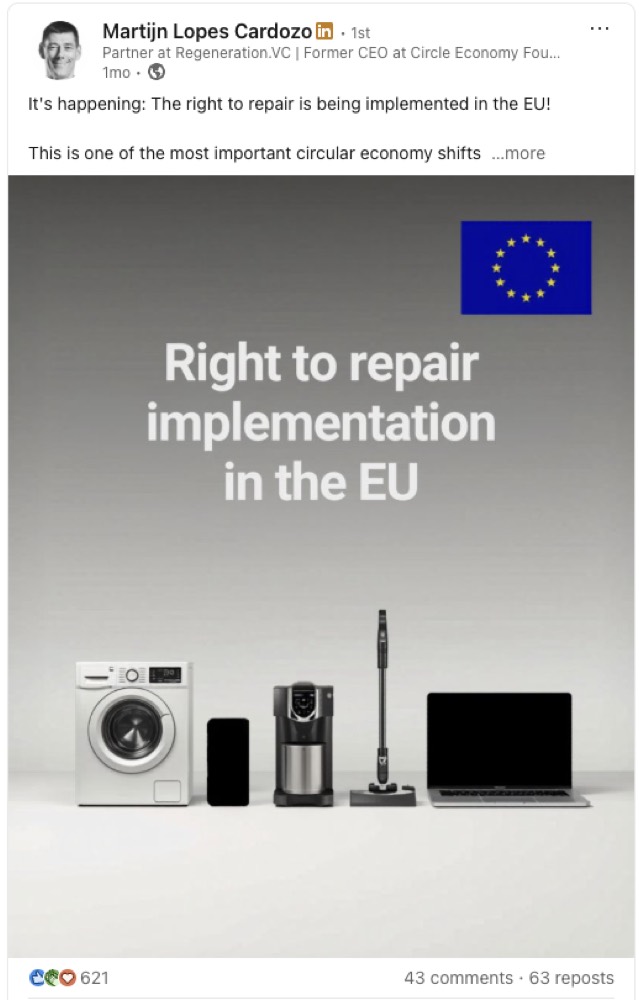
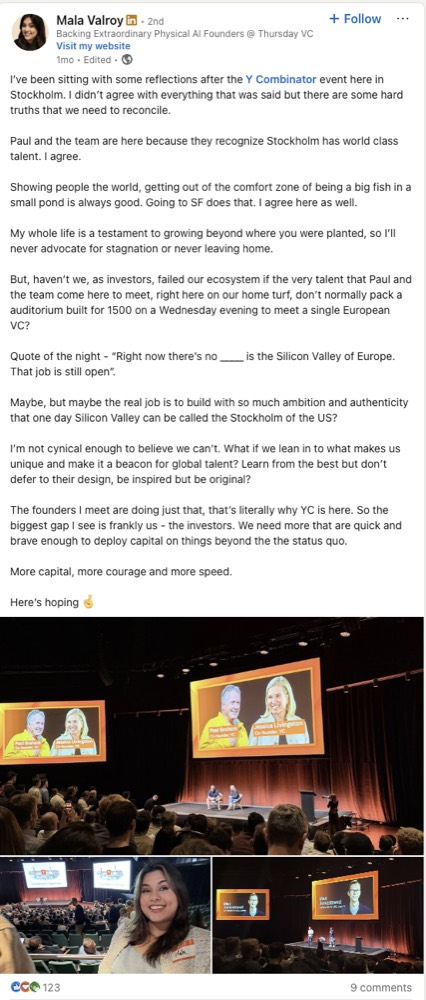
People increasingly follow a person with a point of view, not a fund that sounds like a press release.
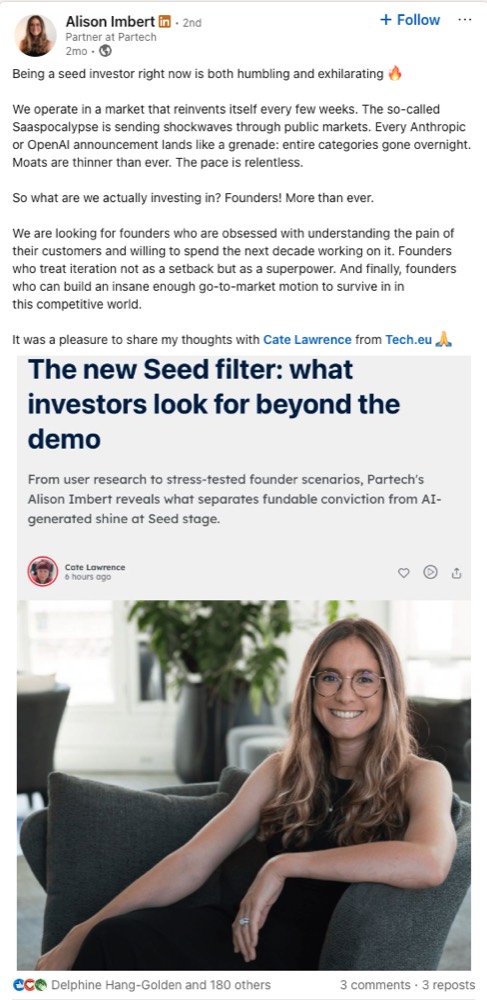
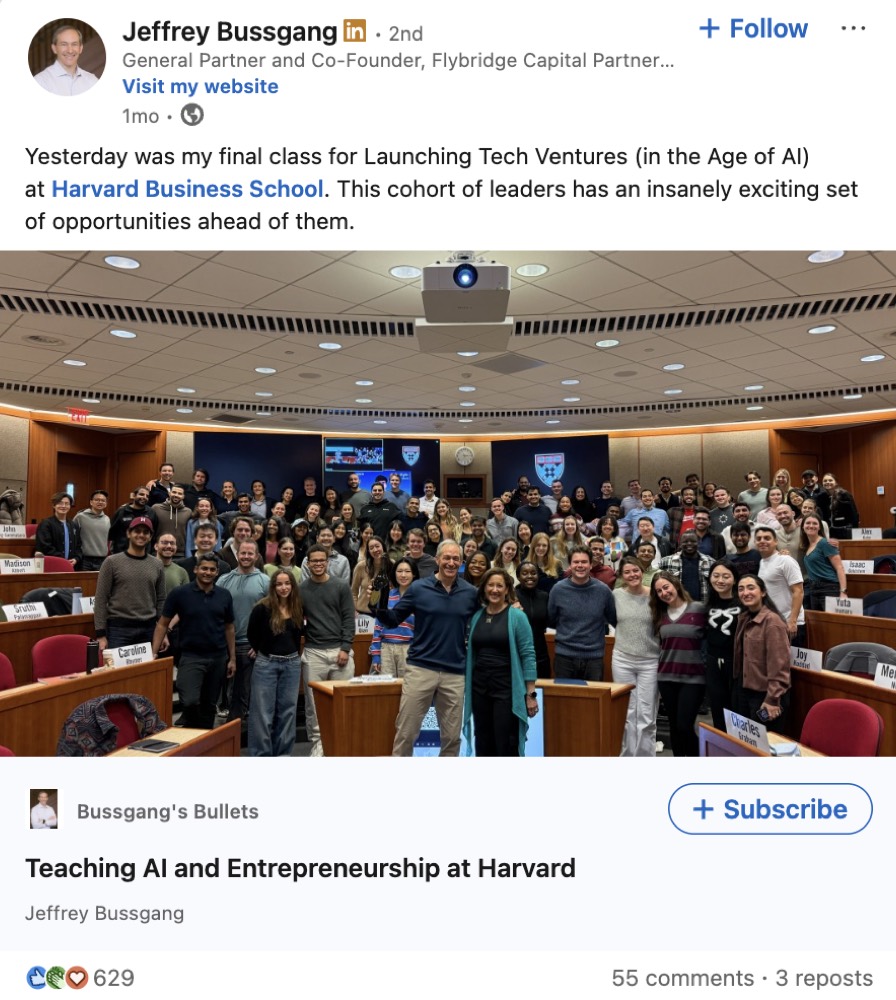
As the LinkedIn feed fills with AI-made content, the rough and the real will gain credibility instead.
Longer, genuinely useful posts will keep pulling ahead of quick takes.
Posts that answer a real question will increasingly get surfaced, both in search and in the AI answers people now rely on.
Today, climate and impact liquidity is slow and concentrated, in rebound. Not frozen.
This squeeze on returns will keep shaping how the field communicates. So will the AI wave, of course.
most of the field never posts. About 31% post originals, close to seven in ten stay off the feed.
more investors take the floor. Seniority is not the gate, a title buys nothing here, so the only thing left is having something worth reading.
communication built around occasional large news.
the announcement still lands, but on top of an audience kept warm all year, in public on LinkedIn and at events, and in private on WhatsApp or Signal lists.
a steady stream of news, each diluting the next.
with slower exits, each realized number carries more. Funding news already travels furthest, a 53 median. Put the figure in the open and it weighs more, not less.
compliance made reporting mandatory, and little of it gets checked.
as the rules stop forcing disclosure, choosing to be transparent becomes the signal. Screening gets cheap, claims get easy to verify, and verifiability becomes an edge.
posts that show the win.
posts that walk through the decision behind it. A point of view, or three or more numbers, travels about twice as far. The February report saw the appetite, this one confirms it.
a single way to communicate everywhere.
funds lean into the ground each knows best. As EU and US regulation drift apart, communication adapts to the local frame, and AI makes producing for each one cheap.
In a field rebranding from mission to performance, the credible voice holds both: still believes, but proves it.
Caring used to be the signal.
Now everyone does, so it is the entry ticket, not the edge. What stands out is proving it works.
Mission-only framing reads dated.
The posts that travel pair the purpose with a hard fact: a cost curve, a deployment number, a moat.
Coverage is moving from founders to fund managers, +22 versus -5.
Less “why this matters”, more “why this is a sound place to put capital”.
Engagement here is almost identity-neutral, so the largest audience at a firm stops matching its org chart, and starts matching its audience chart.
Not the recap, not the “three lessons I learned” post, but the actual analytical work shown live: why a hot deal got passed on, how an uncertain market got weighed, the model behind a thesis. Complex, technical thinking, in the open, unsimplified.
Plain, unvarnished, no corporate gloss, written the way people actually talk. That bluntness is exactly what earns the reach.
In a slower market, the clearest public thinker earns the most trust.
Some people in this ranking might recognise themselves more in another role: an active or former founder, an investment community builder, and so on. For readability, I chose to keep them in the list.
Top 20 · Climate & impact VC
How high their engagement (likes + comments) can climb when a post takes off.
 🇩🇪 Jeannette zu FürstenbergGeneral Catalyst · max 1,5947802
 🇫🇷🇺🇸 Yoann BernoClimate Insiders · max 5,0216413🇩🇪 Tim SchumacherWorld Fund · max 3,0965524
 🇫🇷 Gary AnssensRAISE · max 8555235🇫🇷🇵🇹 Laurie MenoudAt One Ventures · max 1,8953126
 🇫🇷 Frederic MugnierClimate Club · max 7932977
 🇫🇷🇬🇧 Hugo HazonConcept Ventures · max 8162958
 🇺🇸 Caie KelleyLowercarbon Capital · max 4592859
 🇩🇪 Christian MieleHeadline · max 92923710
 🇳🇱 Reinder LubbersNo Such Ventures · max 300214
 🇮🇳 Abhilash KarriSusquehanna Asia VC · max 35520812
 🇫🇷 Sofia Dahounedaphni · max 42319513
 🇫🇷 Adam S. LasriYellow · max 22218614
 🇦🇹🇺🇸 Markus Wagneri5growth · max 81518015
 🇸🇪 Pär-Jörgen PärsonNorthzone · max 1,34817916
 🇦🇺🇸🇬 Ben LindsayInvestible · max 93617817
 🇳🇬 Maya FamoduIngressive Capital · max 48917518
 🇩🇪 Nikolas SamiosPT1 · max 47917219
 🇫🇷 Maxime ParadisEurazeo · max 22117020
 🇫🇷🇺🇸 Stephanie Rieben-de RoquefeuilAlumni Ventures · max 427170
Top 20 · Climate & impact VC
Their chances of strong engagement (likes + comments) every time they post.
🇫🇷 Gary AnssensRAISE · max 8556032🇩🇪 Jeannette zu FürstenbergGeneral Catalyst · max 1,5944433🇺🇸 Caie KelleyLowercarbon Capital · max 4592834🇫🇷🇺🇸 Yoann BernoClimate Insiders · max 5,0212325🇳🇱 Reinder LubbersNo Such Ventures · max 3002236🇮🇳 Abhilash KarriSusquehanna Asia VC · max 3552227 🇨🇦 Andrea BarriosSandpiper Ventures · max 2282228🇫🇷 Frederic MugnierClimate Club · max 7931999
 🇫🇷 Paul MedevielleTeampact.ventures · max 19518910
 🇺🇸 Deena ShakirLux Capital · max 286179🇫🇷 Adam S. LasriYellow · max 22217712🇫🇷 Maxime ParadisEurazeo · max 22117113
 🇺🇸 Brendan WallaceFifth Wall · max 29514414
 🇱🇰🇬🇧 Suranga ChandratillakeBalderton Capital · max 20714415
 🇨🇭 Michael Sidlerredalpine · max 26214416
 🇫🇷 Eugénie CunyRAISE Sherpas · max 20613917
 🇩🇪 Nadine GeiserWorld Fund · max 28813518
 🇸🇪 Sara ResvikEndeit Capital · max 16413319
 🇺🇸 Roxana GrunenwaldDorm Room Fund · max 39411720
 🇩🇪 Susanne FrommVanagon Ventures · max 123116
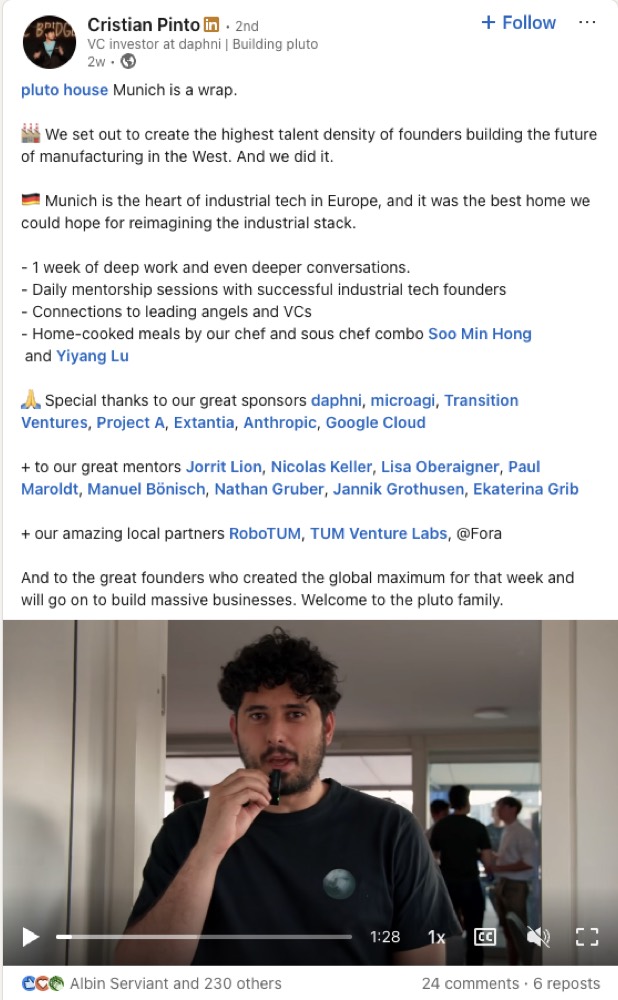
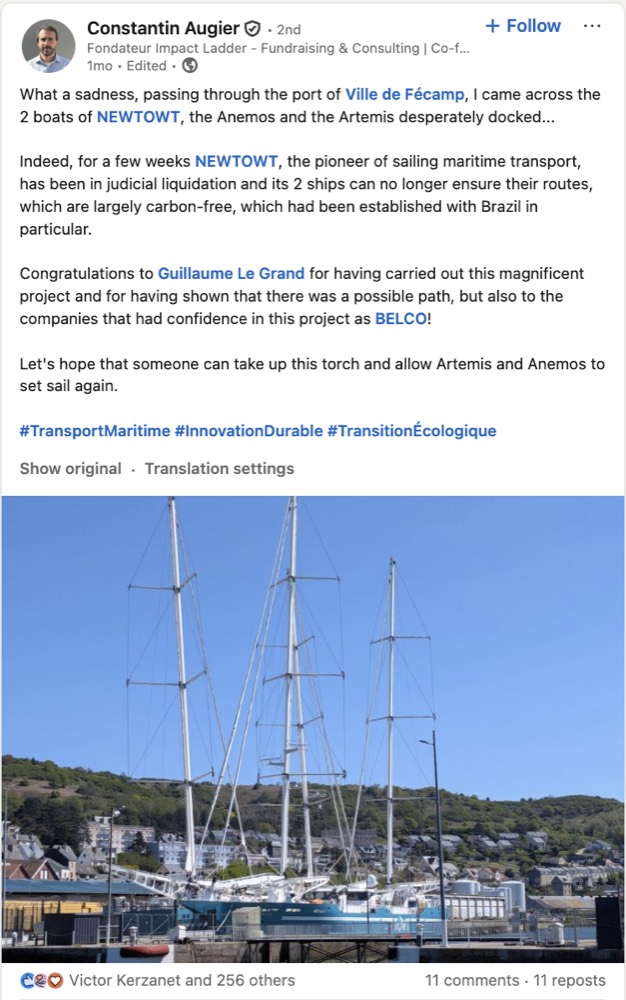
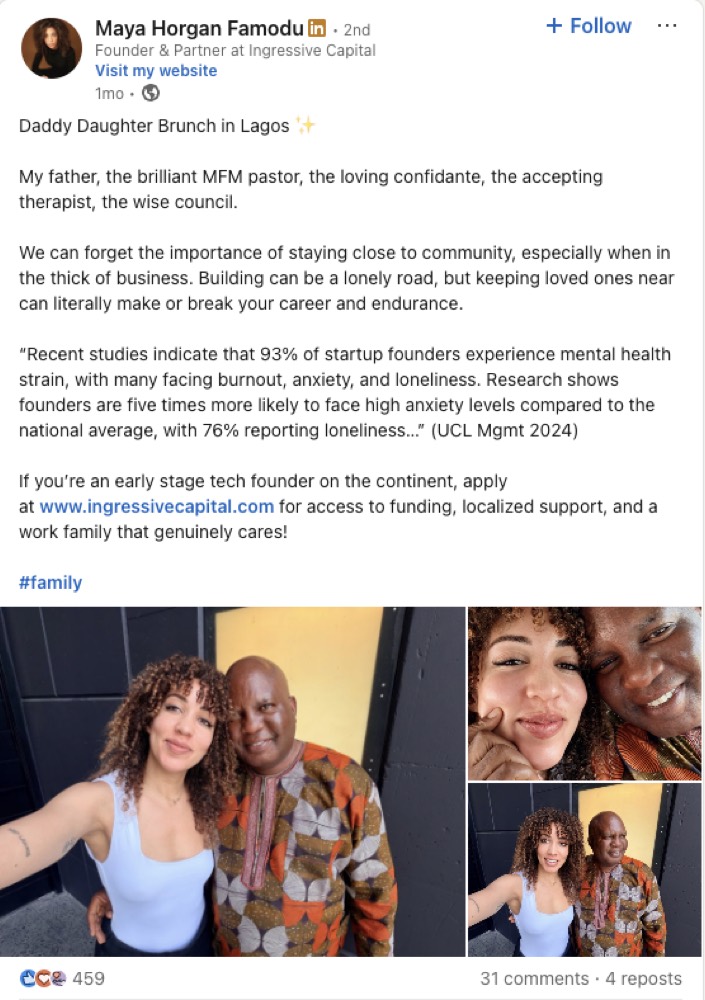
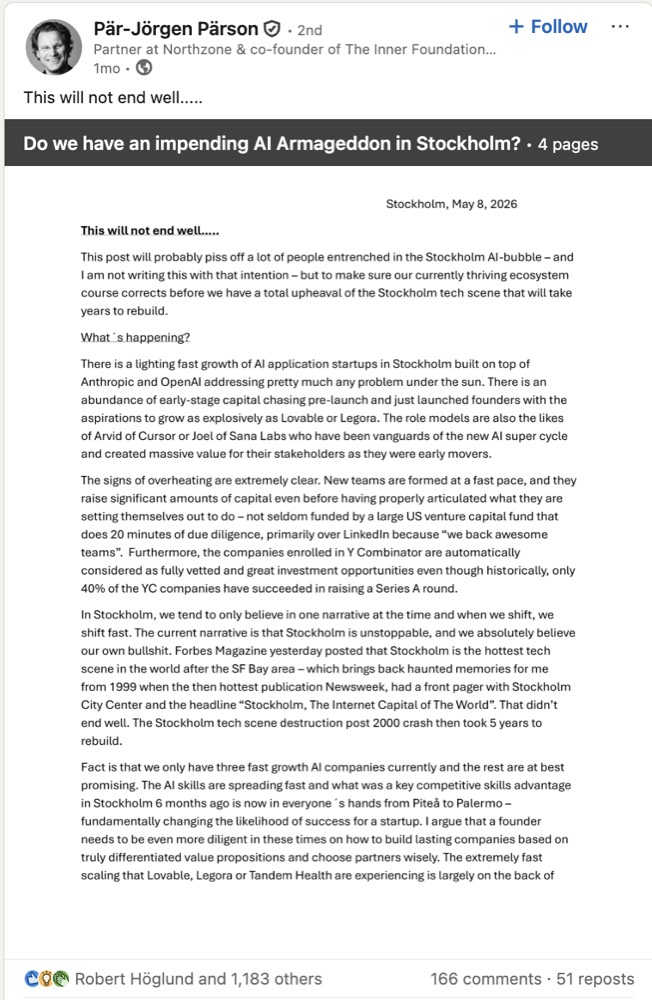
One investor per communication style, the method, not the numbers.


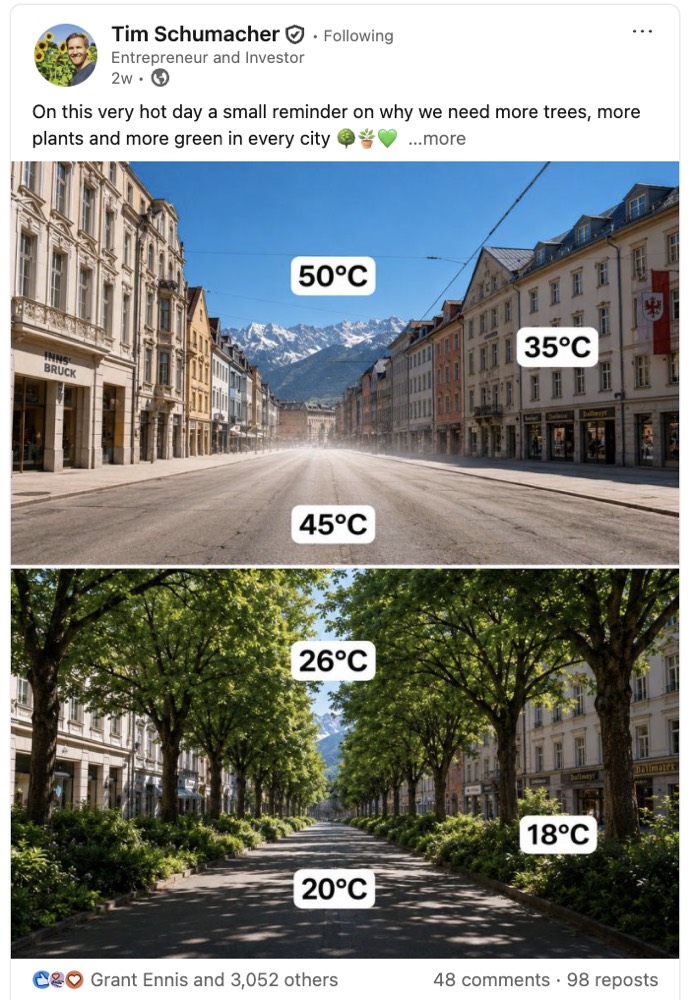
“On this very hot day, a small reminder on why we need more trees, more plants and more green in every city, and a shout-out to Ecosia.”

“I'm back. I don't usually share personal stories here, but this one feels important. A few months ago, I gave birth to our daughter Lea at 27 weeks...”
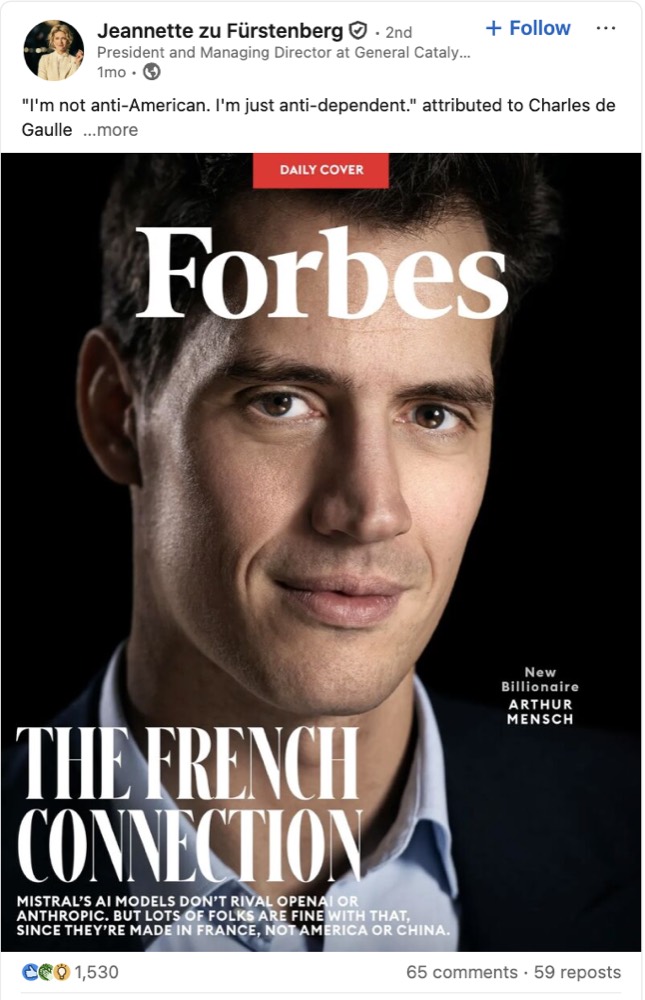
“I'm not anti-American. I'm just anti-dependent. (de Gaulle). That quote has been in my head for a while. It shapes why I believe in Mistral.”
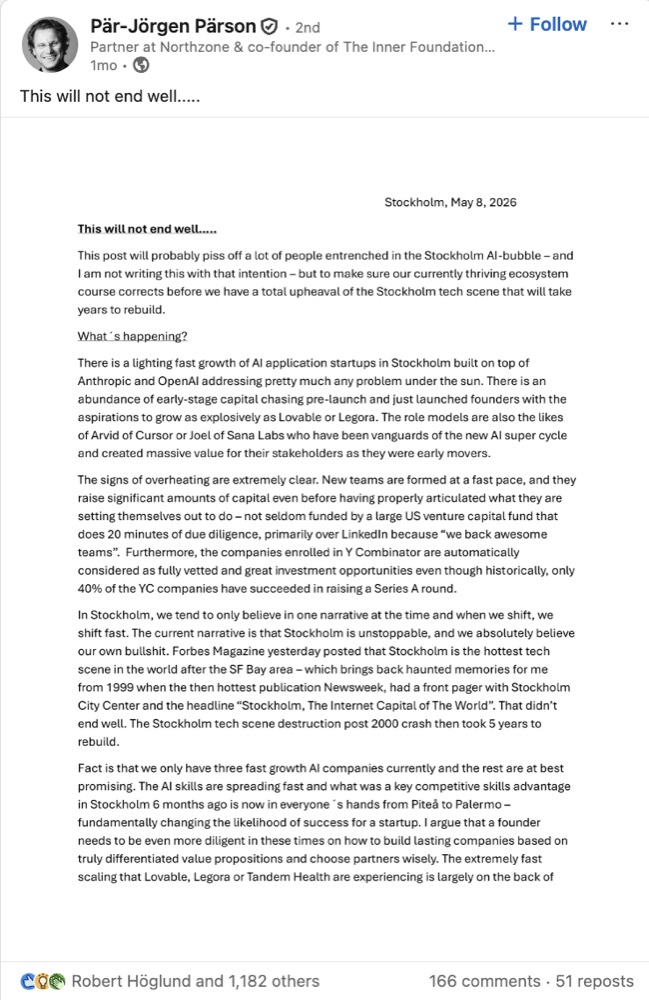
“This will not end well...”
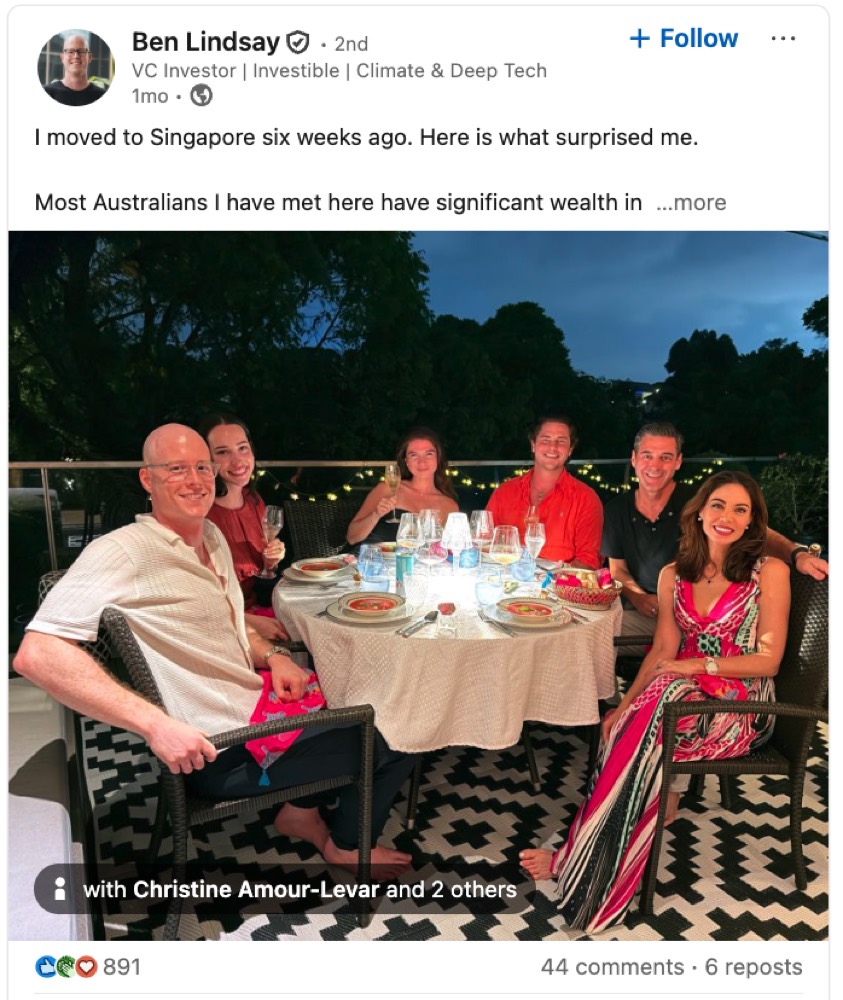
“I moved to Singapore six weeks ago. Here is what surprised me. Most Australians I have met here have significant wealth in property, super, and listed equities. Almost none have any exposure to private markets...”
Top 20 · Climate & impact funds
Funds whose investors get strong engagement every time they post (min 3 active voices).
 General Catalyst212
 Eurazeo125
 Balderton Capital102
 Octopus Ventures87
 Lightrock82
 daphni76
 AENU74
 Climate Club74
 World Fund67
 Teampact.ventures66
 At One Ventures55
 Atomico54
 Bpifrance54
 Molten Ventures47
 Planet A Ventures44
 Regeneration.VC38
 Norrsken VC26
 Future Energy Ventures26
 Systemiq Capital26
 Speedinvest25
Here is what it comes down to, then two things to take away.
The whole report in three numbers, one per part.
About 60 people produce half the sector's engagement.
8 in 10 funds appear through a single person. Individuals carry the voice, not brands.
It is not who you are. It is whether you have built an audience.
60% of engagement comes from the audience already built, 40% from the post. LinkedIn runs in divisions: the best post runs about 2.5x its own average, never 100x. Consistency is the only bridge.
The game is shifting from announcing what you did to showing how you think.
A point of view earns about 2x a plain announcement, and stays rare (under 1% of posts). With only 66 VC-backed IPOs in 2025, there is little left to announce. Today applause, 5 comments per 100 likes. Tomorrow, debate.
Bonus
Bonus
It critiques and steers a draft against these findings. It does not write first, and it is no magic wand: it won't guarantee reach or replace having something to say.
Download the skill below. One Markdown file, no setup.
Drop a draft, or a rough idea, into Claude with the skill loaded.
Get a diagnosis: saturated angle or open lane, hook, length, a real point of view vs an empty announcement. A rewrite only if you ask for one.
Bonus
In February I read the whole climate room: 2,228 founders and operators, 17,264 posts. This time, only the VCs. Side by side, the channel works almost the same for both.